
 Jocelyn Seamer Education
S8 E4 - The Secret Weapon of Phonics that We Are Probably Not Getting Right

Picture Mnemonics to Boost Phonics
Hello, hello, it's Jocelyn here and welcome to the Structured Literacy podcast. Today we are tackling a phonics teaching resource that has been around for a very long time, but that I think we could be using a lot better to boost our phonics results. Picture mnemonics have been researched for the last 40 years. Many classrooms have them, many programs include them, but whether or not we're getting the bang for our buck from this resource is something that I want to talk about today. Before we get to 5 ways we can improve how we use them, I want to share a little bit about what picture mnemonics are and the research that sits behind them.
What Are They?
Picture mnemonics can be loosely described as a visual memory aid that integrates the letter shape with an illustration of an object that starts with that letter sound. There are lots of different versions floating around, everything from a letter A with an apple sitting underneath it to fully embedded mnemonics where the shape of the letter is intentionally and very carefully built into the image itself.
Before I discuss research and practical application, it's important to know that research has not been conducted on using embedded picture mnemonics beyond single letters. So what I'm about to share does not apply to consonant or vowel digraphs. Some practitioners and companies have moved beyond the research on this. We have chosen not to take our resources beyond the alphabet, both because the research base isn't there and because I actually don't think it's a worthwhile practice for a range of reasons. But that bit about worthwhile practice is my opinion, not a research-related idea, so please take it as that.
Letter-sound Association Study
Let's go back in the Wayback Machine to 1984 with our friend Linnea Ehri, and her colleagues Deffner and Wilce, and an article titled Pictorial Mnemonics for Phonics that was published in the Journal of Educational Psychology (Ehri et al., 1984). Like just about all research on picture mnemonics, this study was a small-scale one. It looked at whether the picture mnemonics helped readers learn letter-sound associations. Children who learned with pictures that had the letter built into them, such as the letter F drawn as the stem of a flower, learned more letter-sound associations than children who saw the same pictures drawn separately from the letters or who had no pictures at all. The suggestion was that the integrated pictures were effective because they linked two otherwise unconnected items in memory: the flower with the F at the start of that word, and the grapheme. And this is the job of an embedded picture mnemonic: it creates a bridge between the existing schema that the child has, which is the picture and the sound it starts with, and that squiggly line, which is the letter they need to connect the phoneme to.
I'm going to share one more reference with you, and there are actually so many that it's difficult to choose the most important ones. This reference isn't a research study, it's an article by Timothy Shanahan from 2021 (Shanahan, 2021) on synthesising findings across four independent studies, three of which were conducted by Linnea Ehri, so we know that they're the good stuff. And this is the quote.
Those findings conclude that embedded mnemonics reduce the repetition required to learn letters, improve long-term retention, decrease confusion, and support transfer to reading and spelling.
And this is what we are seeing with students and schools we're working with as well.
They're Not Being Used
So if these findings are long established, why am I bothering to make a podcast about it today? Well, I think that we're not using the picture mnemonics available to us in the most effective way, and that is very likely getting in the way of our results. I'm recording this at the end of October 2026. If you have students in Foundation or even Year 1 and 2 who are arriving at the end of the year without phoneme-grapheme correspondences sound, for recall as well as recognition, and they're not able to write the letters with correct formation, then this episode is going to be enormously helpful to you.
Number 1: Not a Decoration
So here are the five ways that we can maximise the effectiveness of picture mnemonics in our classroom. Way number one, stop treating them as decoration and make sure you plan to fade them. Picture mnemonics are not a nice picture that you pop on the wall and have there in case students need them. In fact, I would recommend that maybe you don't put them on the wall at all. Picture mnemonics only work when they are fully integrated into the instruction. Having them on the wall for students to refer to when they haven't been used to create that memory bridge between something I know and something I need to learn pretty much makes them useless for the students who need them the most. This is also related to the fading of the mnemonic. When we leave the mnemonic in place for too long, we get students doing things like looking at the letter and saying, that's Danny the duck, or that's the feather. This is counterproductive when our goal is automatic phoneme-grapheme correspondence, both for recognition and retrieval to use for spelling. So the important decision here is around what the job of the mnemonic is and knowing when that job is done.
Number 2: Fully Embedded
Point number two, make sure you're using fully embedded mnemonics. Rather than the letter being plonked on top of a picture or popped beside a picture, it's important to make sure that the letter shape is fully integrated into the image. That helps the student build the bridge between the image, which is the schema they're already coming with, and the phoneme-grapheme correspondence. Now the research I've mentioned used fully embedded mnemonics. There are lots of resources labelled picture mnemonics that aren't fully embedded, so be really careful with what you choose to use.
Number 3: Schema Building Beforehand
The third way we can improve the effectiveness of picture mnemonics is to make sure that the students actually have the schema for the image, and start building that schema before you begin teaching the phonics. In our recently developed set of picture mnemonics, we have the concept of a valley for the letter V. Now, as a 4-, 5-, or 6-year-old, if I don't know what a valley is, it's pretty difficult for me to make that strong connection. So our solution has been to create a full narrative tale for every single letter of the alphabet. So the story for V is about a girl named Violet who really wants to learn to play the violin. To have her lessons, she needs to make her way to Vera's cottage, which is on the other side of a valley. She needs to go down one side and up the other. So the story hooks the student, and by including them in the important parts of the story, it helps to build the schema for them to connect new learning onto. Introducing these stories before the grapheme is introduced or even in the year before formal schooling begins (called preschool, kinder, or transition, depending on the state you are in), is about building schema early. It's not about pushing the curriculum down into the preschool space.
Now there is some research supporting this approach. A 2019 randomised preschool trial found that integrated letter characters, the image, plus a narrative improves students' motivation, letter-sound identification, initial phoneme identification, and blending compared with just plain letter instruction. I want to be really careful here because this is one study of 38 students, and I don't want to overstate the claim. What I will tell you is that we have been trialling these stories with students who have been struggling with phoneme-grapheme correspondences, and we are seeing it work. The students love the story. They're paying attention, which, as we all know, is three-quarters of the battle with young children. So because they're paying attention, they're connecting with the knowledge we want them to.
One more thing on this point. In that 1984 study, before any letter sound training, all of the children were taught to segment the initial sound of the picture names. Now that's really important because the mnemonic only works if you can isolate the first phoneme of the word. Knowing that's the one that looks like a flower doesn't help you connect the grapheme of the letter F to the phoneme of /f/ if you can't hear the /f/ at the start of the word. So integrating some phonological awareness and very early gentle phonemic awareness into the work is also important. But as we saw from the 2019 study, including a story that has the opportunity for this boosts that skill. So all of the elements interact.
Number 4: Connecting Mnemonic to Letter Formation
Number four is make sure we're connecting the mnemonic to the letter formation. A 2015 study (Labat, et al, 2015) showed that combining visual letter information with graphomotor or haptic activity, which is just movement, improved letter sound learning more than the simpler training that just had the visual. This also extended into some persistence, so those results lasted longer, and transferred to untrained letters. Now, my teacher-thinking around this is that there are a limited number of handwriting strokes, and once you've learned a couple, it's easier to learn the letters that include that particular formation. A young child doesn't know what a letter looks like and has no experience of forming it. So when we're trying to get them to understand the starting point and direction of handwriting, they can't anticipate where the pencil is supposed to go. Embedding the formation in the picture mnemonic gives them a mental model of what's going to happen so they can actually plan rather than just guessing.
Now, I saw this happen just this week in a school that I've been working with for a couple of years. There were some little girls who were really struggling with letter formation, and I had a beautiful opportunity to share the story of Danny the Duck. Now, Danny forgot to send the invitations for his dad's birthday party, so he took his drum off into the woods to gather their friends. And the children join in in the story as Danny's banging his drum and they say dum di-dum di-dum. Now, when everybody arrives at the party, Dad starts bopping along, moving his hand around the shape of Danny's drum, up Danny's head and down to the ground. Now there's a moment of tension in the story that the students engage with, there's a refrain for them to join in with, and there's a movement that traces the letter. So we're going to include the picture of Danny in the show notes of this episode on our website so you can see how it all connects.
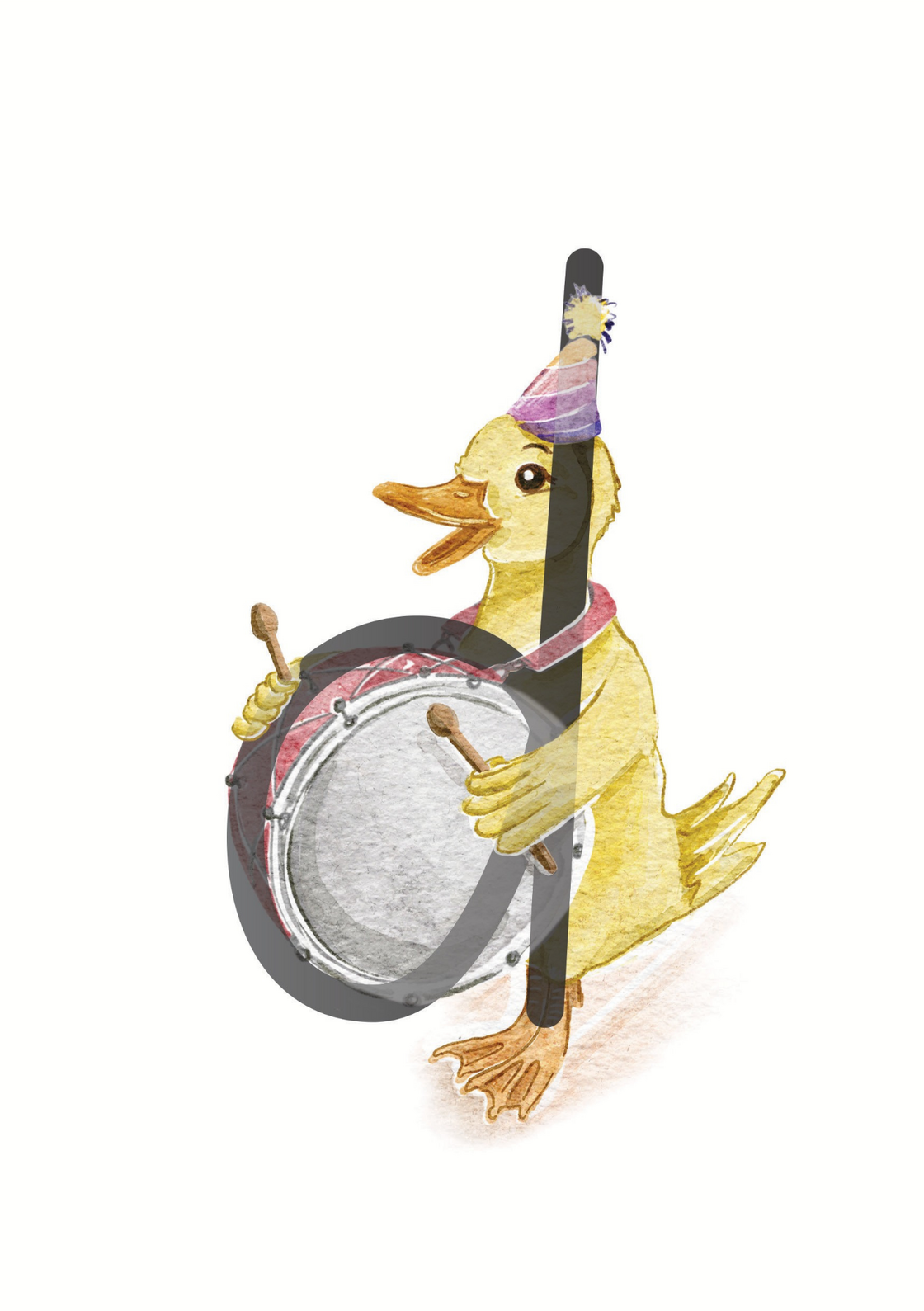
Danny the Duck from the Reading Success Tales. Available for purchase here.
Now, this was one moment with a before and after shot. So before the story, I watched the little girls really struggling to form this letter. After the story, after having had them join in with the relevant parts in the way we've designed, they could both write the letter with ease. Such a simple observation does not a research finding make. But this is far from an isolated incident. We have seen this with students of a range of ages, in a range of contexts, as we've been trialing the resource, and we've been seeing it time after time.
Number 5: Form the Letter
Point number five is have students actually form the letter, not trace or copy it. Both tracing and direct copying are passive. The students aren't cognitively engaged. So we want the student forming the letter, thinking about the starting point and direction, and doing that repeatedly so that it becomes automatic over time. That is, there is no conscious thought. Remember, if the letter formation isn't stable and automatic, you will not get text-level writing from your students no matter their age. So this is a really critically important part of the bigger writing picture. We will link in the show notes to an article from the LDA bulletin about what the difference is between tracing and writing in terms of what happens inside students' brains.
Find the LDA article here.
Conclusion
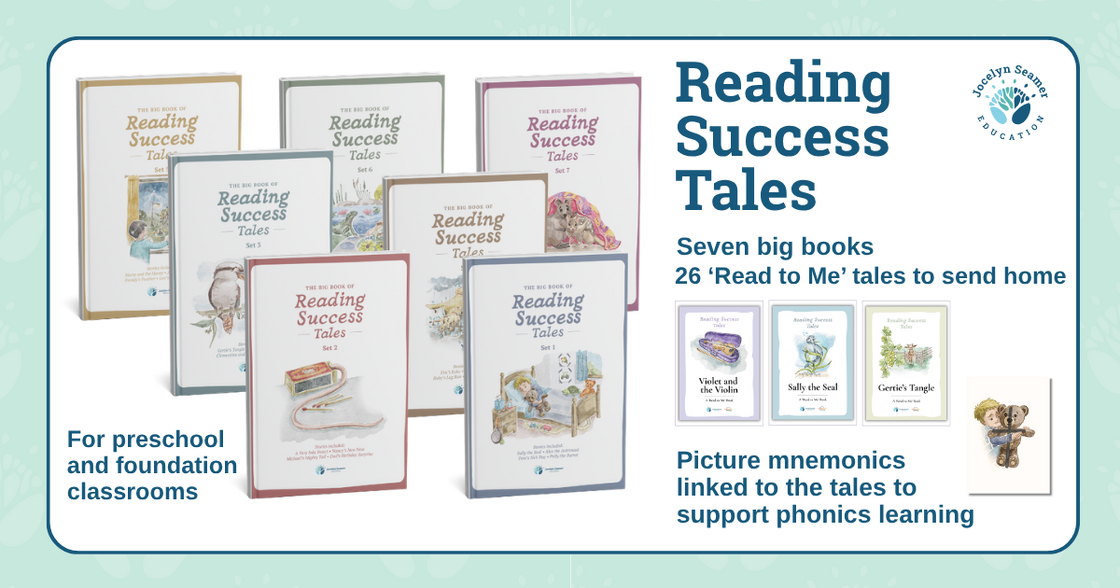
When we bring all of the components I've described together in the instruction, we're going to get the very best results from our picture mnemonics. But without the nuance of the instruction, mnemonics are just a nice thing that we stick on the wall. If you're interested in our recently developed Reading Success Tales and the associated picture mnemonic cards, they're now available through JocelynSeamerEducation.com. We have big books that include all 26 narratives for use in preschool and Foundation. We also have a take-home set of individual stories so that you can include parents in this learning process, which also leans into phonological awareness, vocabulary, and story retell.
That's all from me for now. I hope that this episode has given you some points to discuss with your team so that you can make a plan to strengthen your instruction into the next school year and beyond. Thank you so much for listening to the Structured Literacy Podcast. Happy teaching, everyone. Bye.
References
Ehri, L. C., Deffner, N. D., & Wilce, L. S. (1984). Pictorial mnemonics for phonics. Journal of Educational Psychology, 76(5), 880–893. https://doi.org/10.1037/0022-0663.76.5.880
Labat, H., Vallet, G., Magnan, A., and Ecalle, J. (2015), Facilitating Effect of Multisensory Letter Encoding on Reading and Spelling in 5-Year-Old Children. Appl. Cognit. Psychol., 29, 381–391. doi: 10.1002/acp.3116.
(2021). Learning Letters: Evidence and Questions From a Science-of-Reading Perspective. Read Res Q, 56(S1), S171–S192. https://doi.org/10.1002/rrq.394
Shanahan, S. (2021). A Question I Hate: Should We Use Pictures (Embedded Mnemonics) When Teaching Phonics?. Shanahan on Literacy. https://www.shanahanonliteracy.com/blog/a-question-i-hate-should-we-use-pictures-embedded-mnemonics-when-teaching-phonics
Want to take a look at the Reading Success Tales and picture mnemonic cards? See them here!

0 comments
Leave a comment