
For preschool and Foundation classrooms
Reading Success Tales
Stories children love, written to build oral language and give every letter-sound a memorable start.
Seven A3 big books with 26 illustrated stories. Each story is paired with a mnemonic prompt that helps children remember a sound, the letter that represents it and how to form it.
From $395 plus postage and GST
See the bundles
About the tales
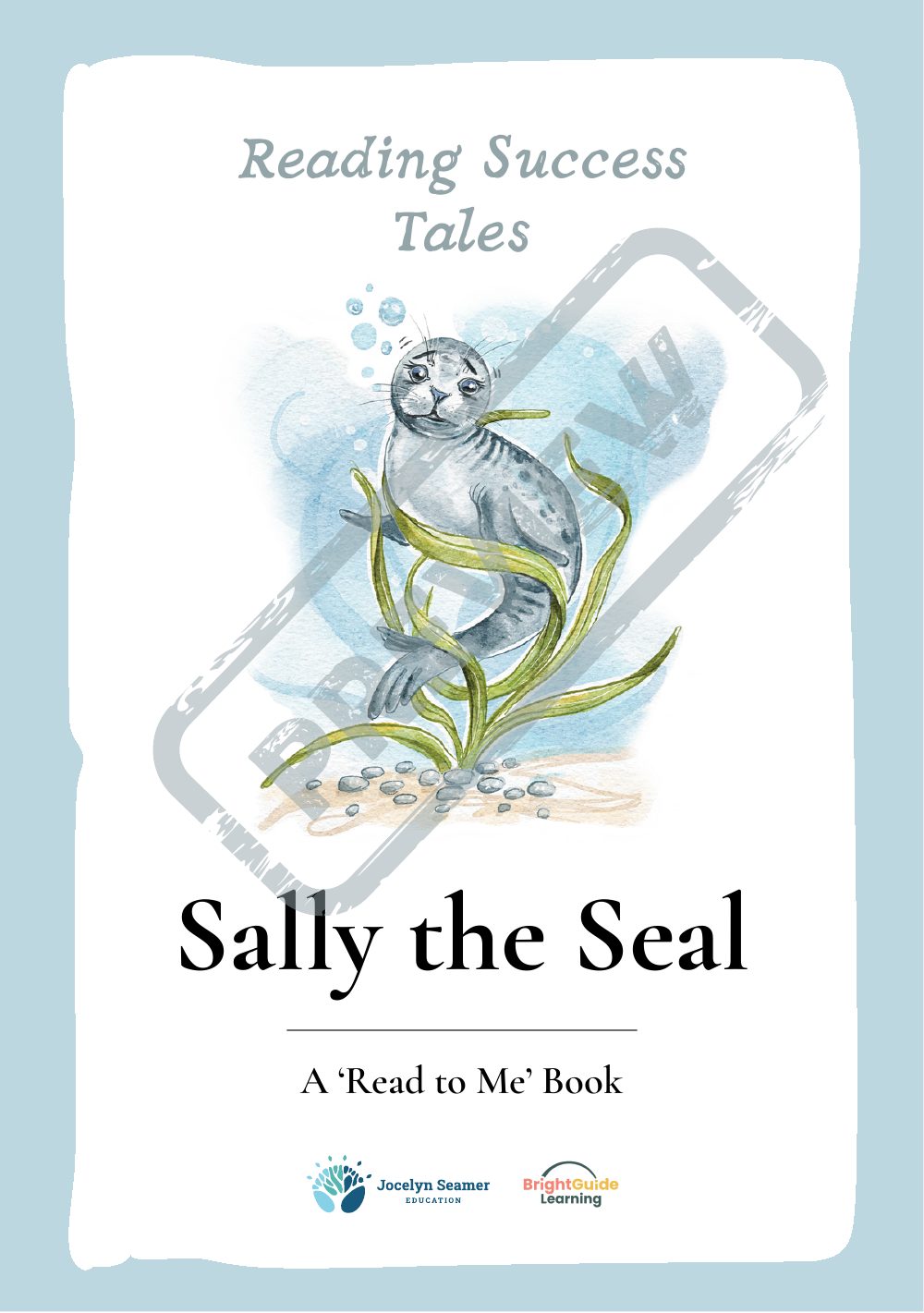
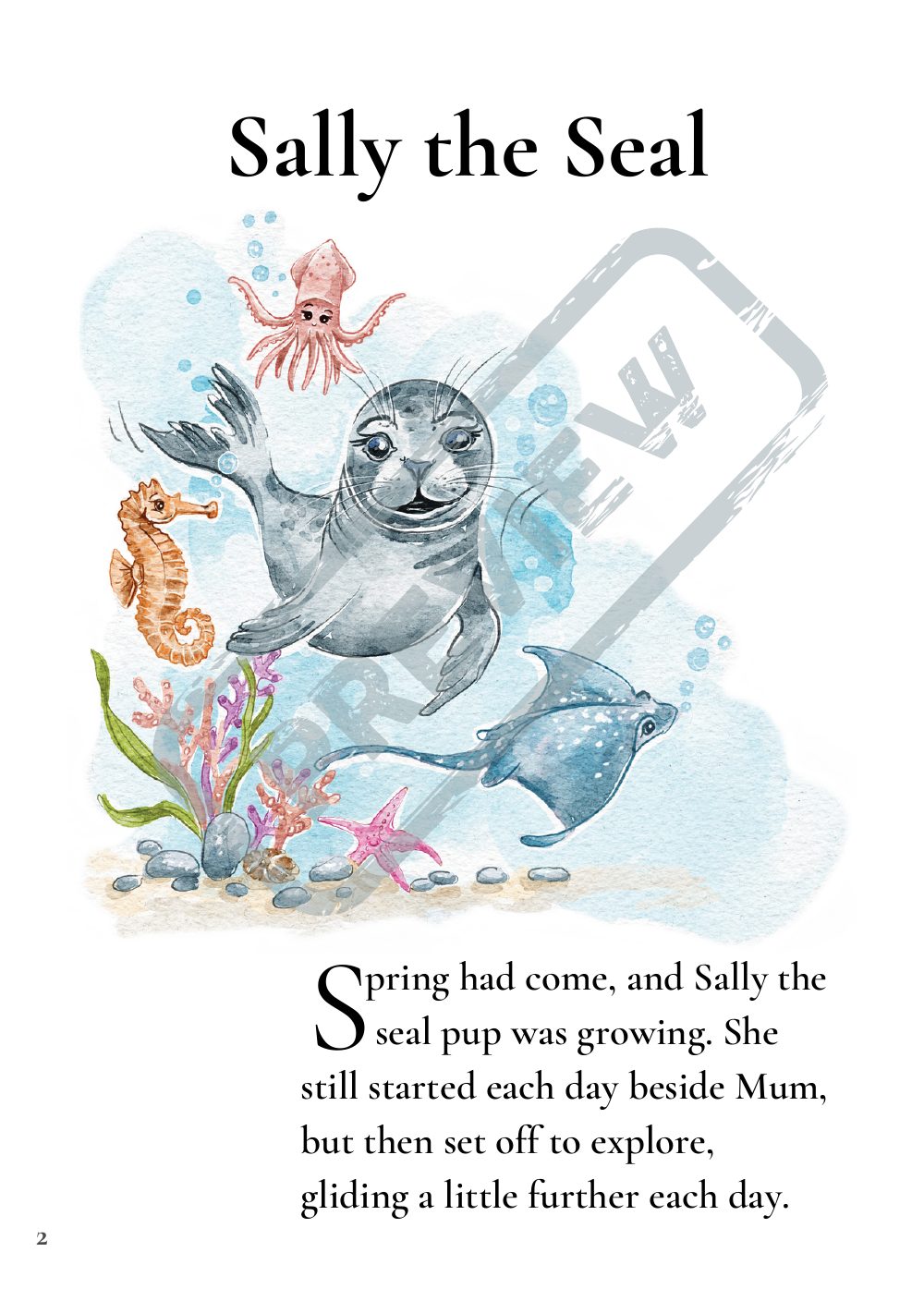
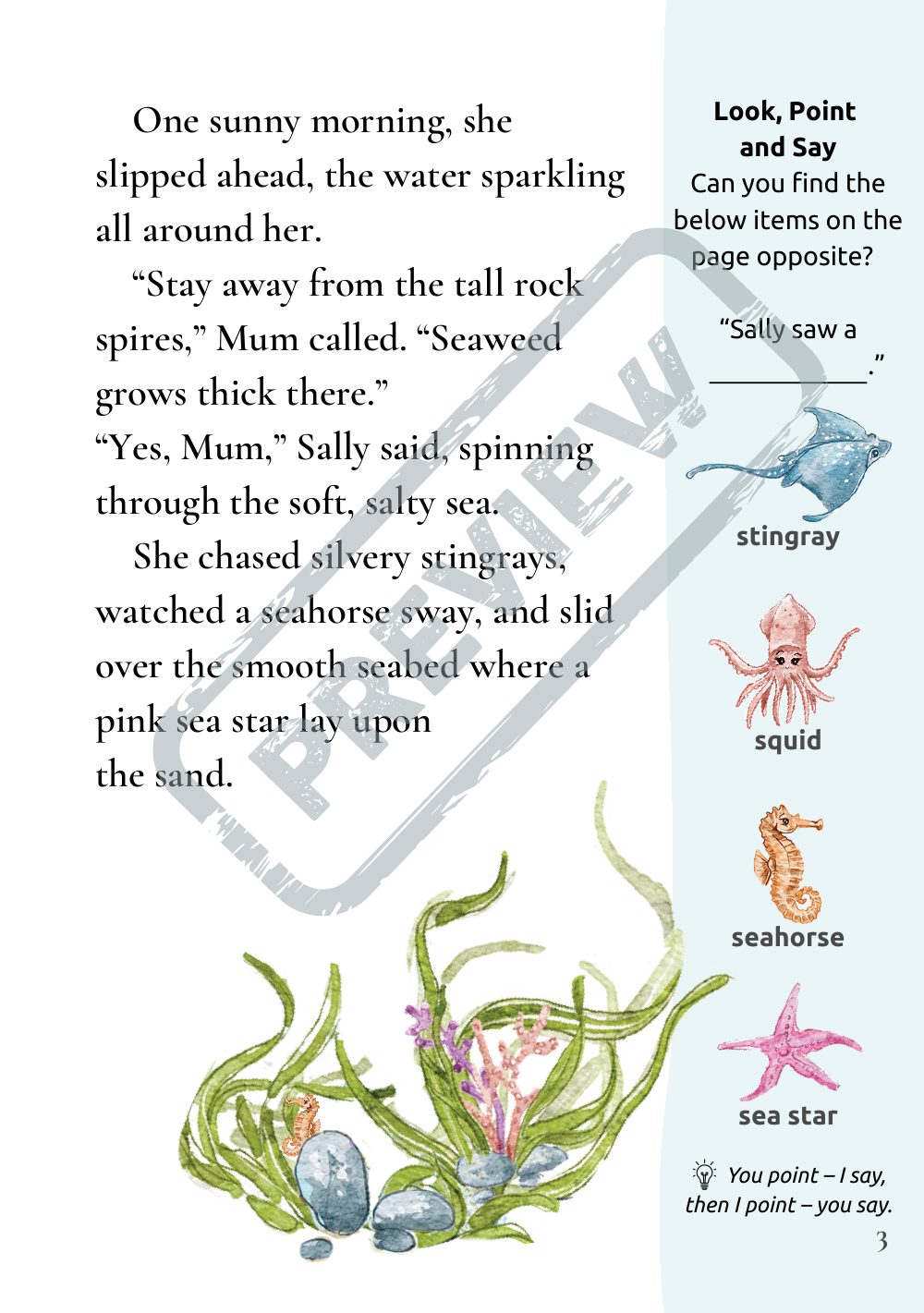
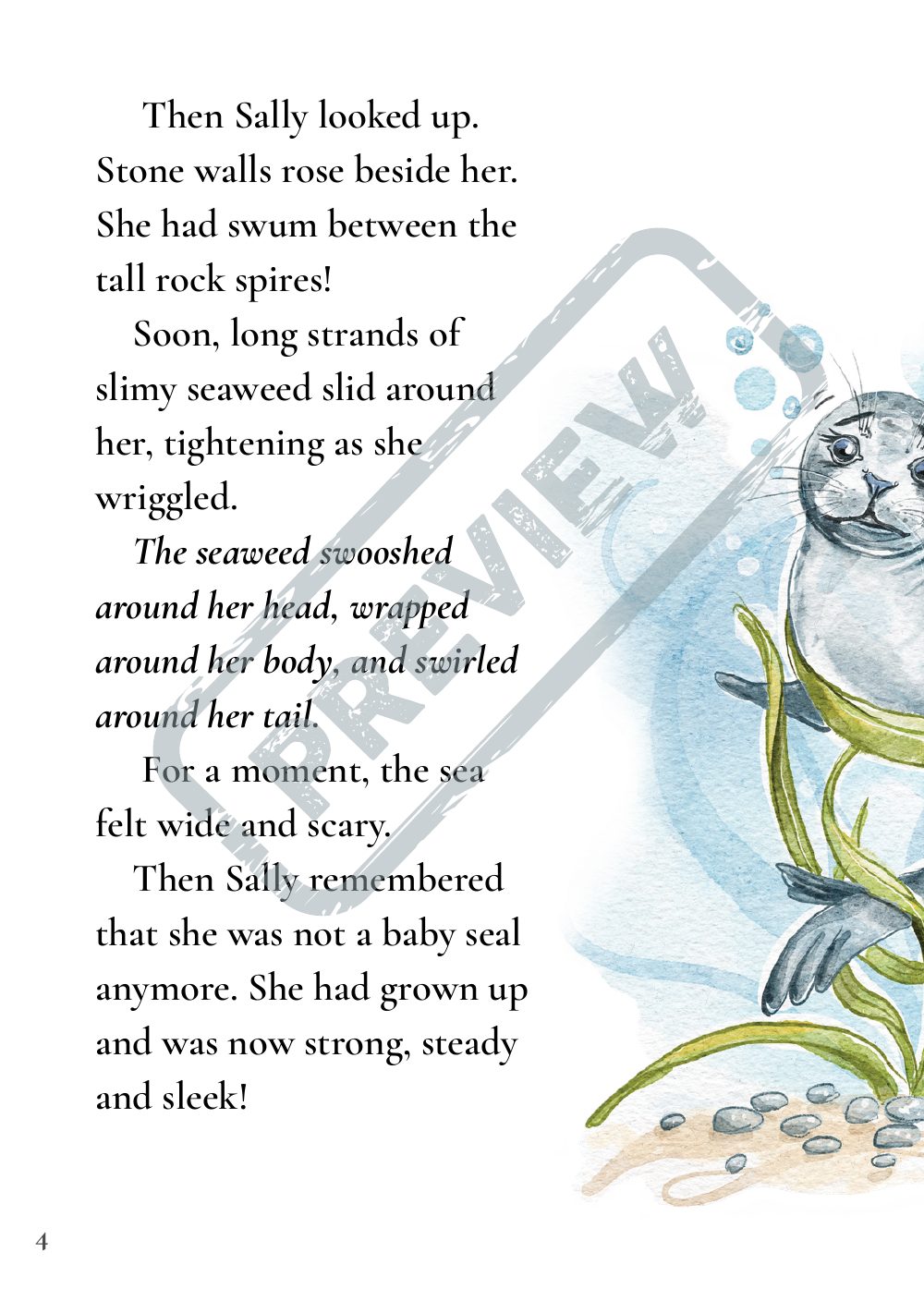
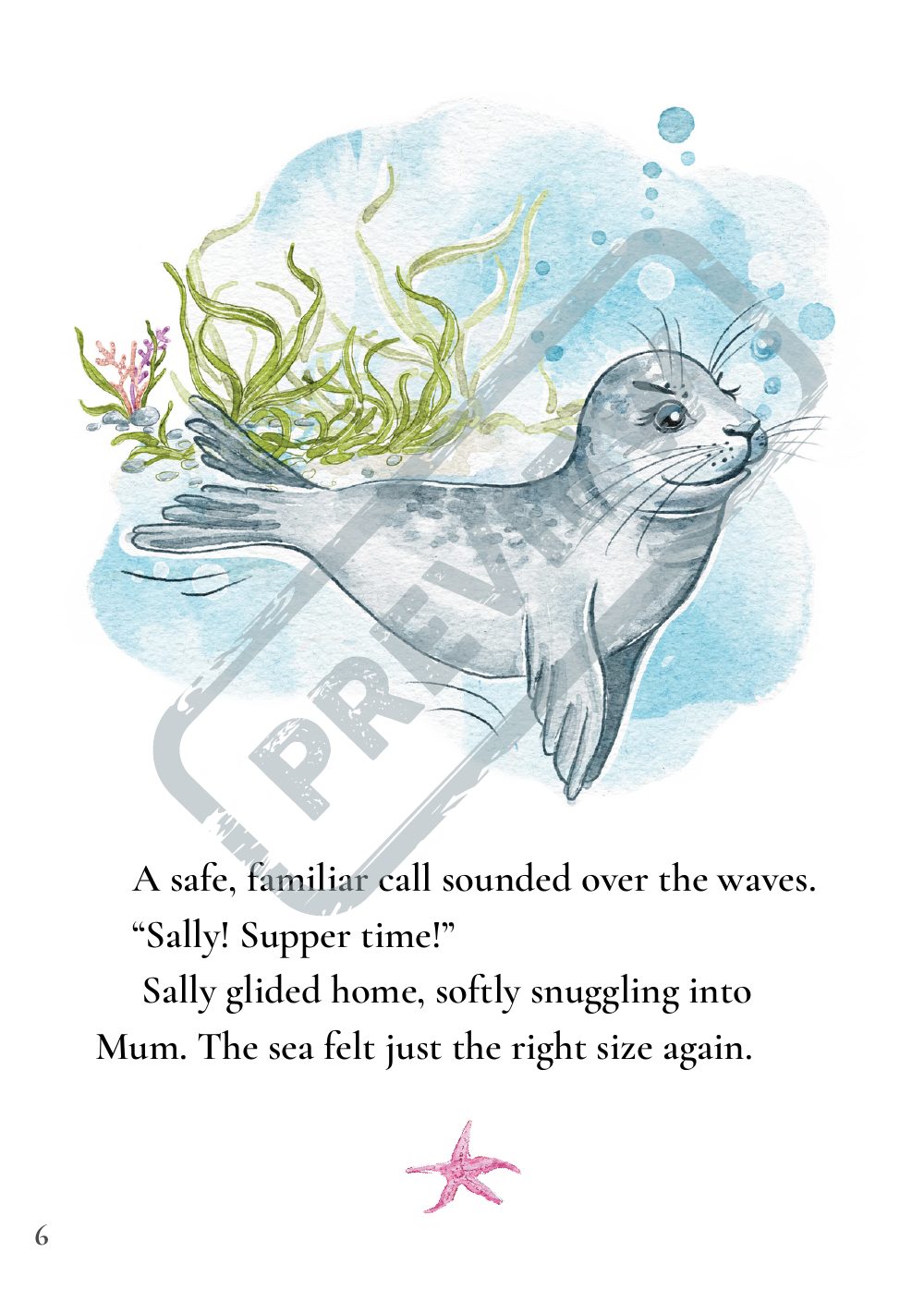
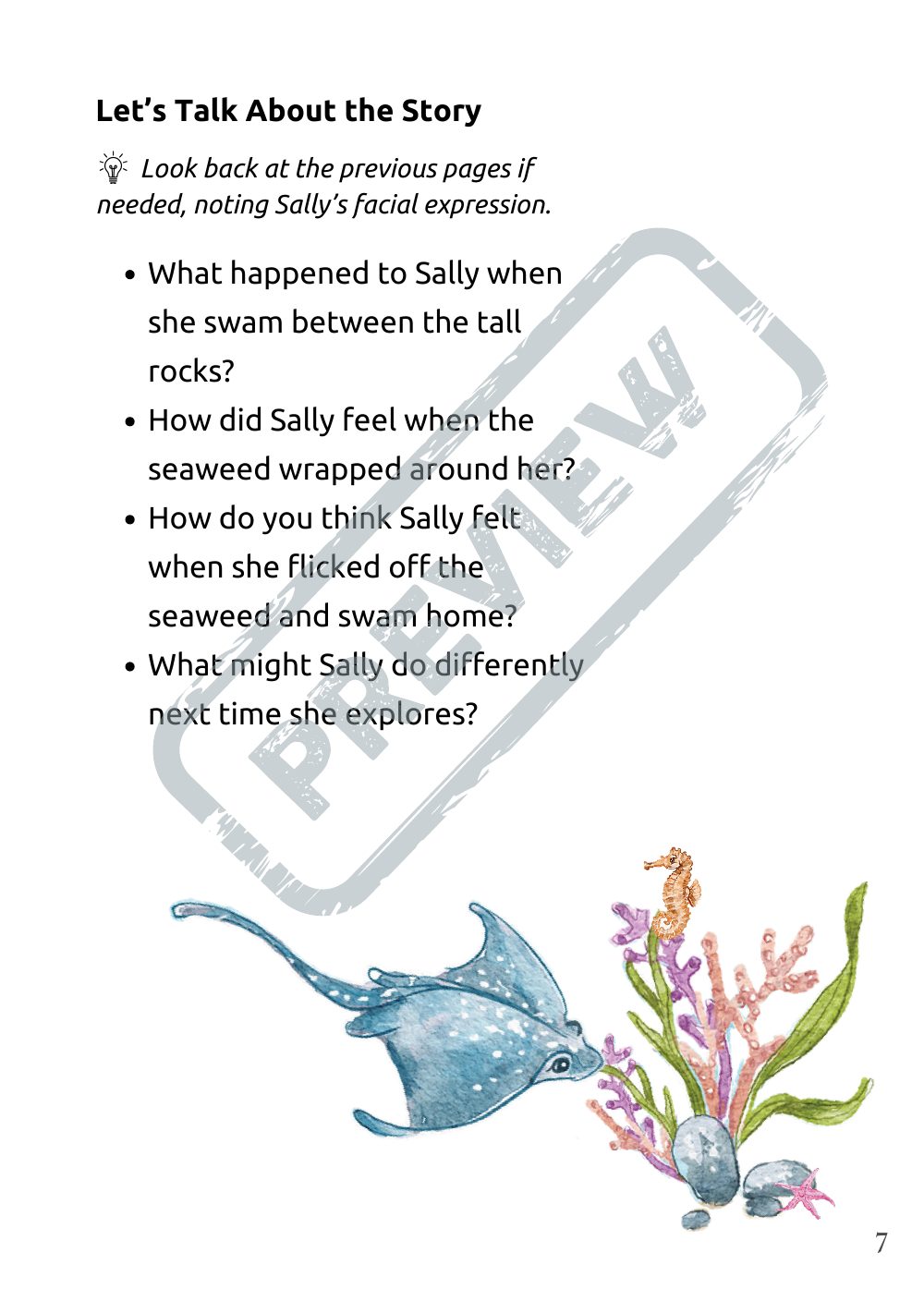
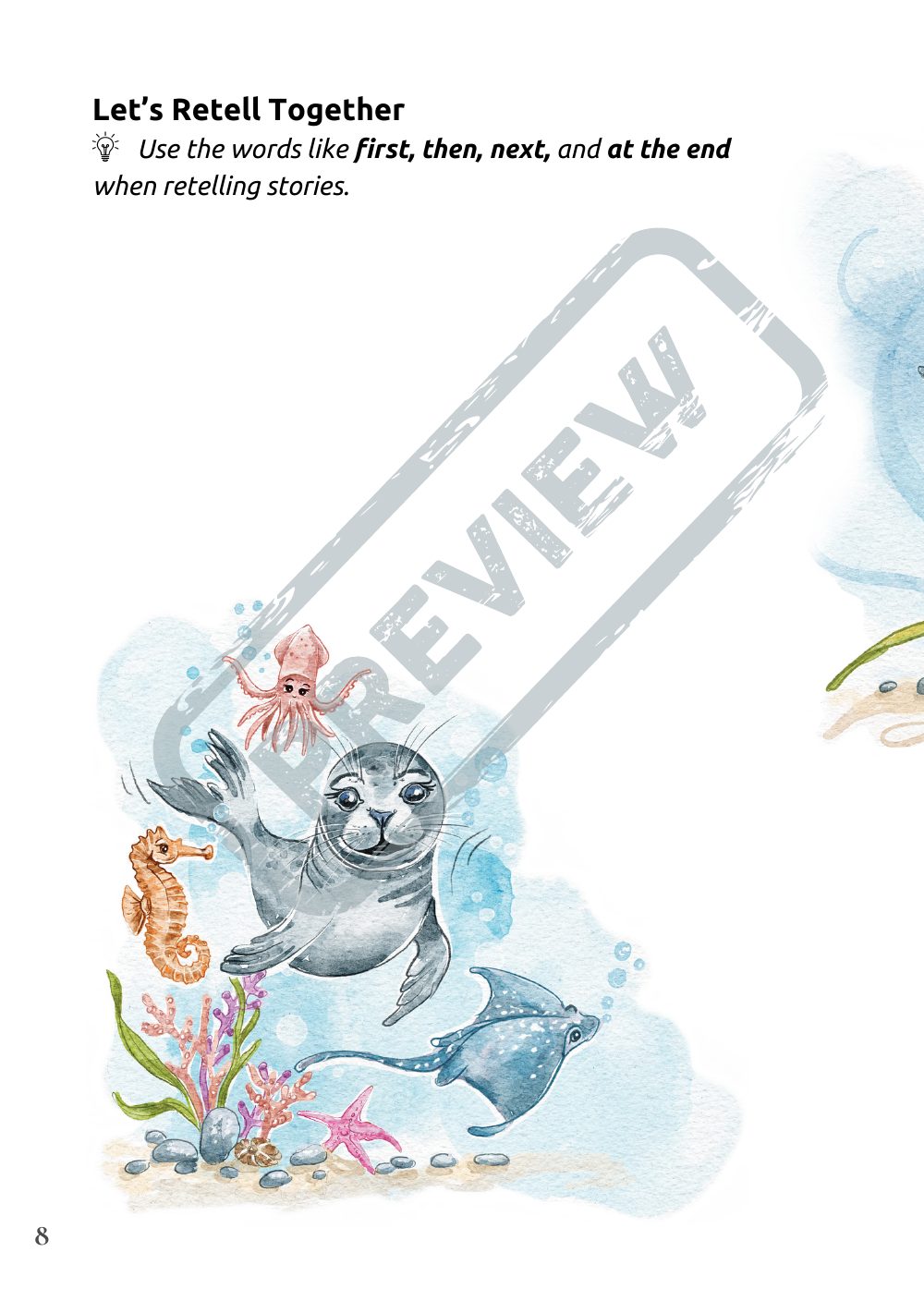
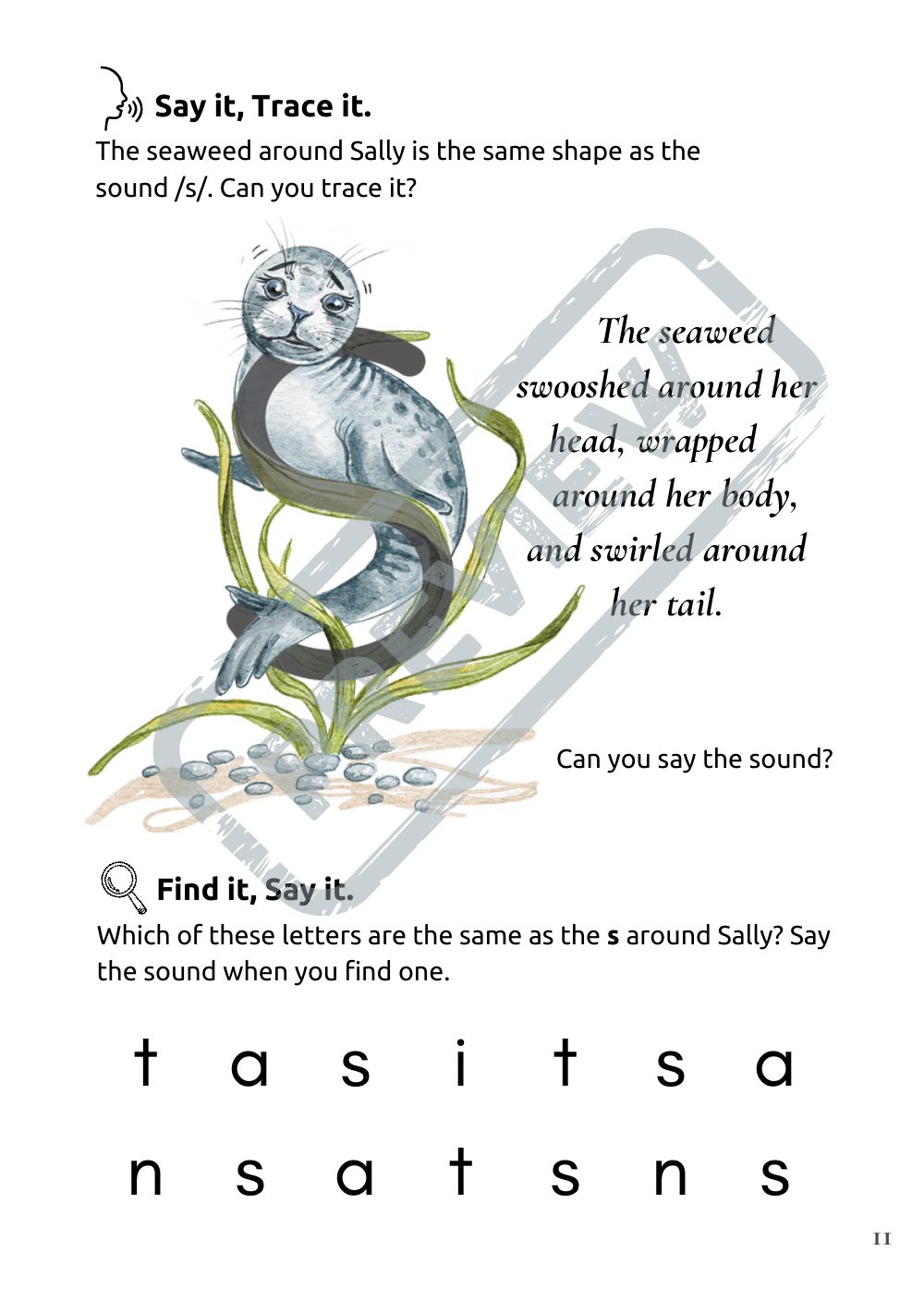
Every Reading Success Tale is first a good story, with characters children care about, watercolor illustrations and rich, engaging language. Sally the seal pup swims too far from Mum and gets tangled in seaweed. Tom strokes his teddy, Terrence, to calm himself on a sick day.
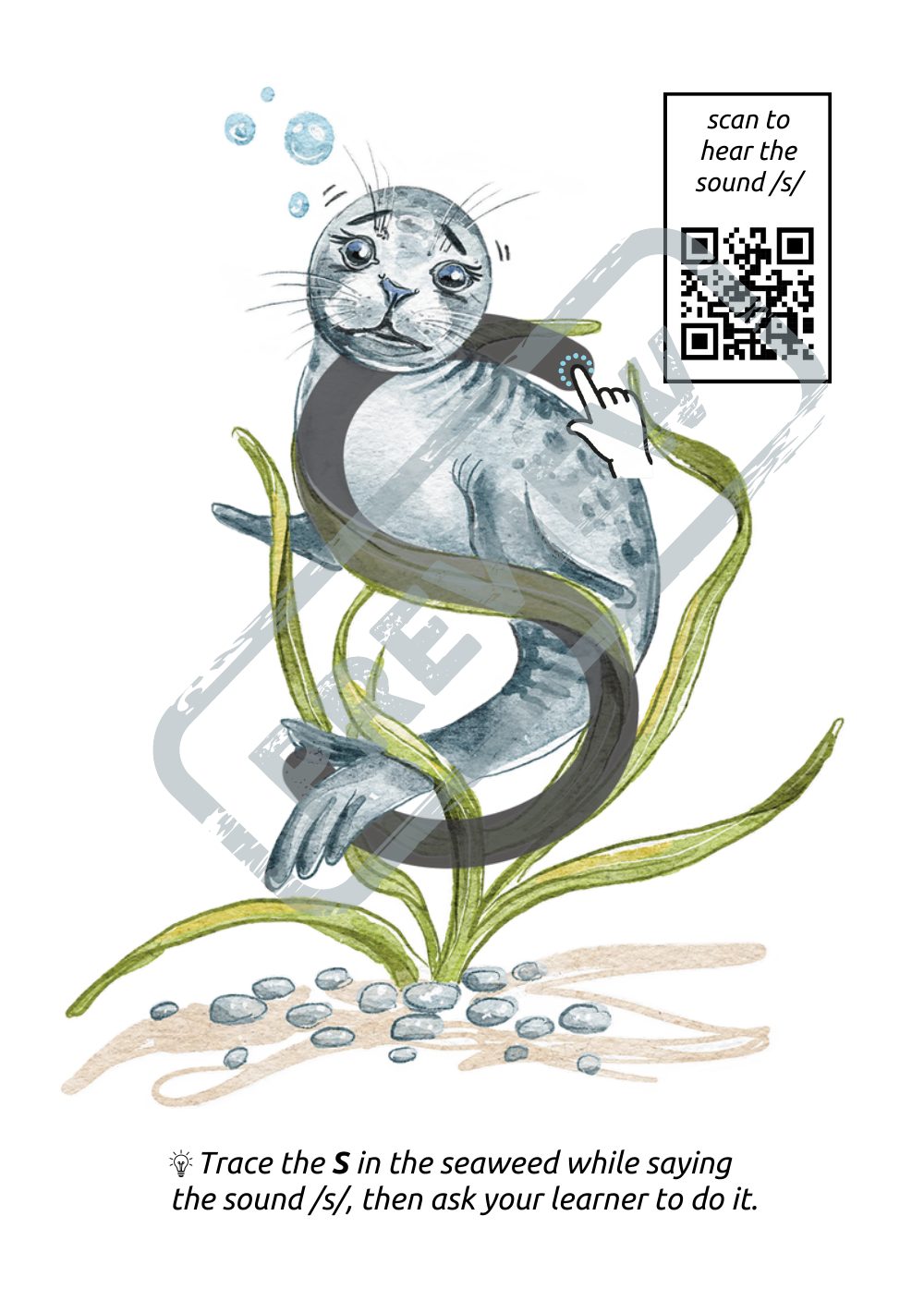
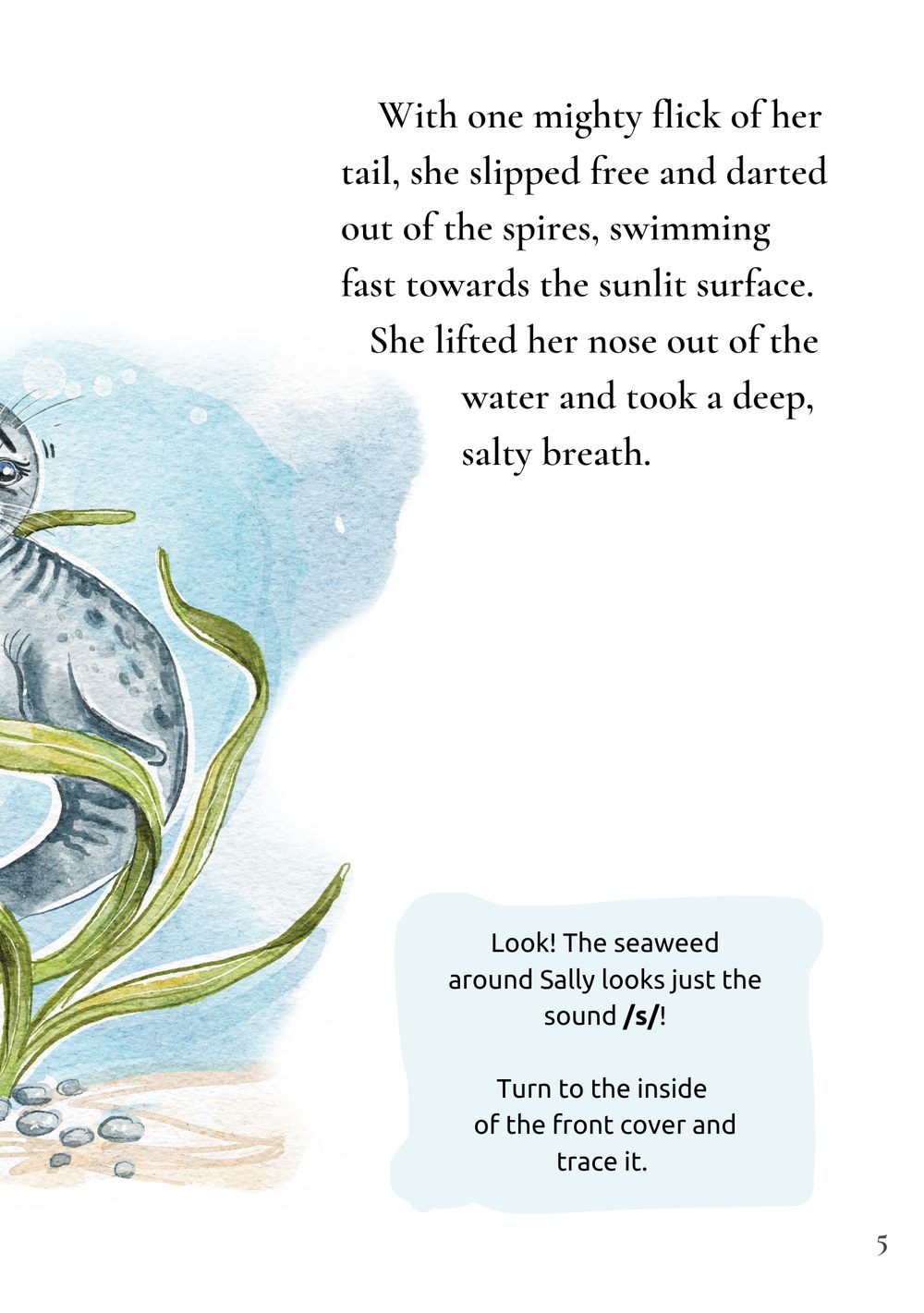
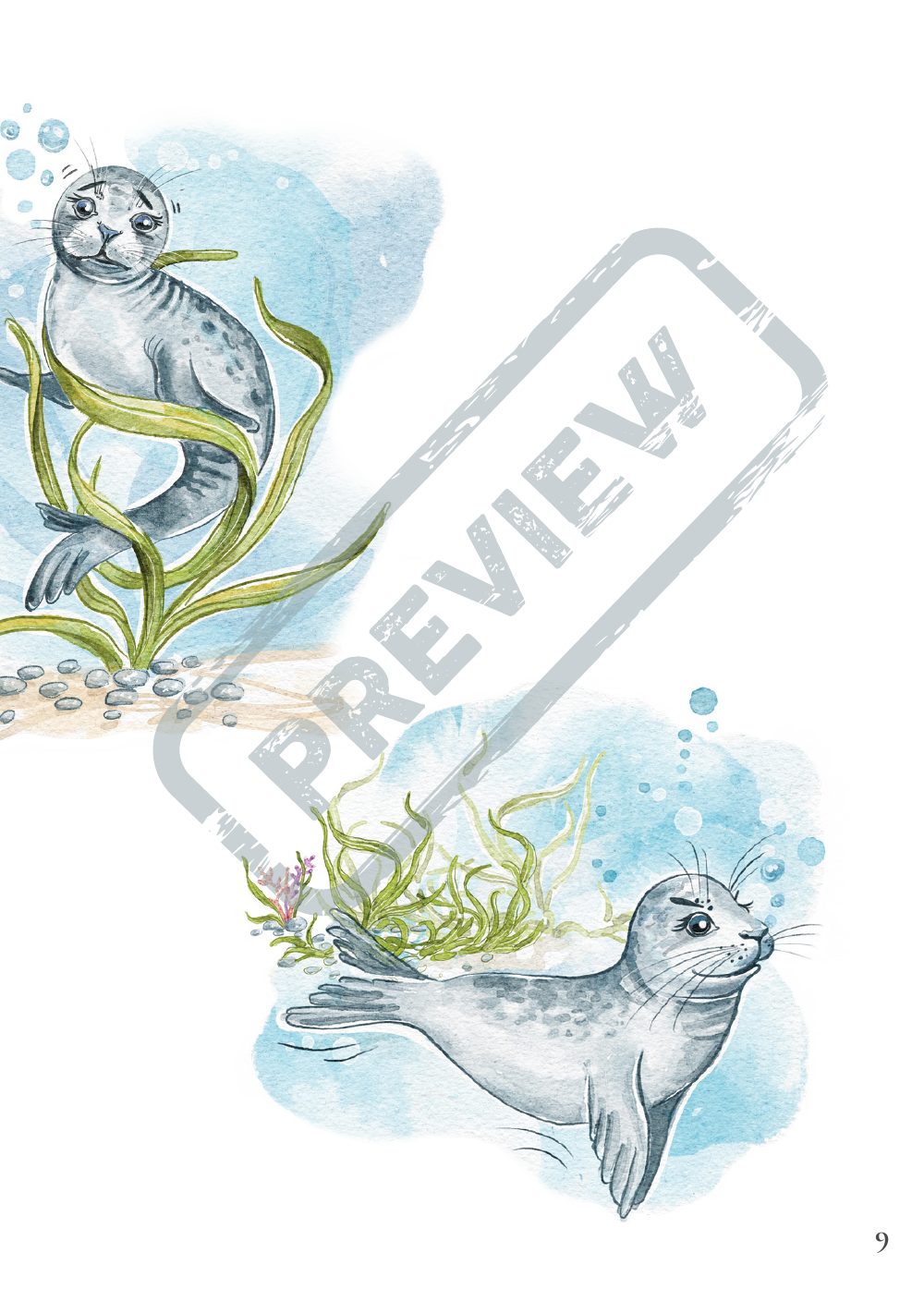
Woven through each story is a moment that reveals a letter's shape. The seaweed swirls around Sally in the shape of an s. Tom's hand traces a t down Terrence and across his arms. These moments become the mnemonic prompts children use to recall the sound, the letter, and how to write it.
The big books are printed at A3 so a whole class can see the pictures and join in. Each page contains guidance for the adults reading, so the support you need is right where you are reading.


Four ways to use each story
One story can serve several purposes across a week. The guidance in each book shows you how.
Oral language and vocabulary
Highlighted words and phrases come with child-friendly explanations to use as you read. On later reads, children repeat a key phrase to a partner and use new words in a sentence of their own. Interactive cues keep attention on the story, and margin markers show where to pause for discussion or an oral retell.
Introducing letter-sound relationships before an explicit lesson
In Foundation, read the story a week before a grapheme appears in your phonics lessons. Children are introduced to the letter and its mnemonic prompt in a familiar context first, so the explicit lesson builds on something they already know. In preschool, the story and prompt give a gentle introduction to letters at children's own pace.
Phonological and phonemic awareness
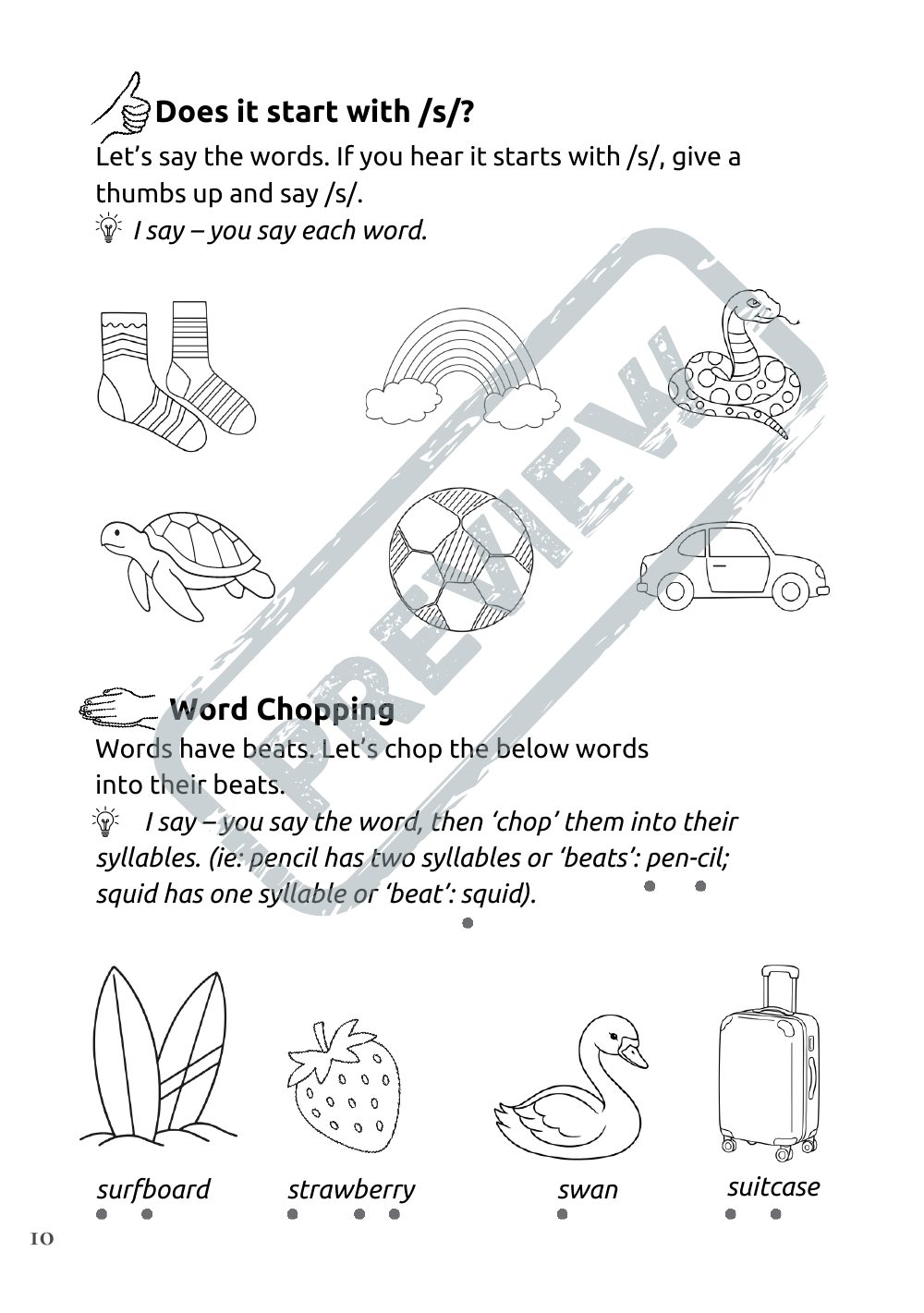
After reading, turn back to the prompts in the book for short oral games. Children chop words into syllables, listen for starting sounds, and blend and segment words aloud. For preschool, this is an introduction to playing with sounds. For Foundation, it adds practice and does not replace work with letters and graphemes.
Correcting letter formation
When a child forms a letter incorrectly, the mnemonic prompt gives you a quick, shared way to correct it. Children air-draw the letter during and after reading while saying the prompt. Prompts are quickly faded, and children recall the letter on their own. This use extends from Foundation to Year 2.
Read to Me books for home
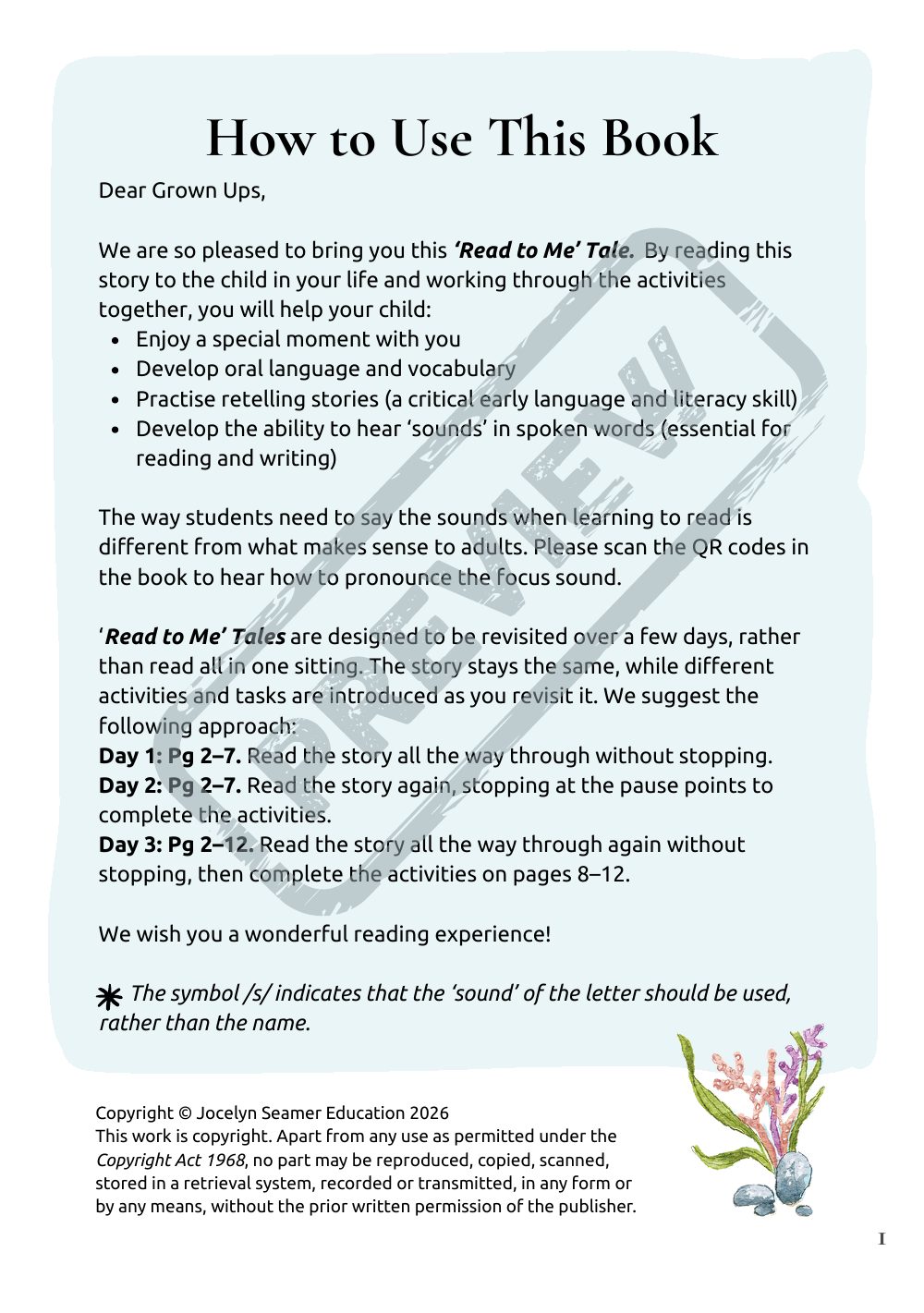
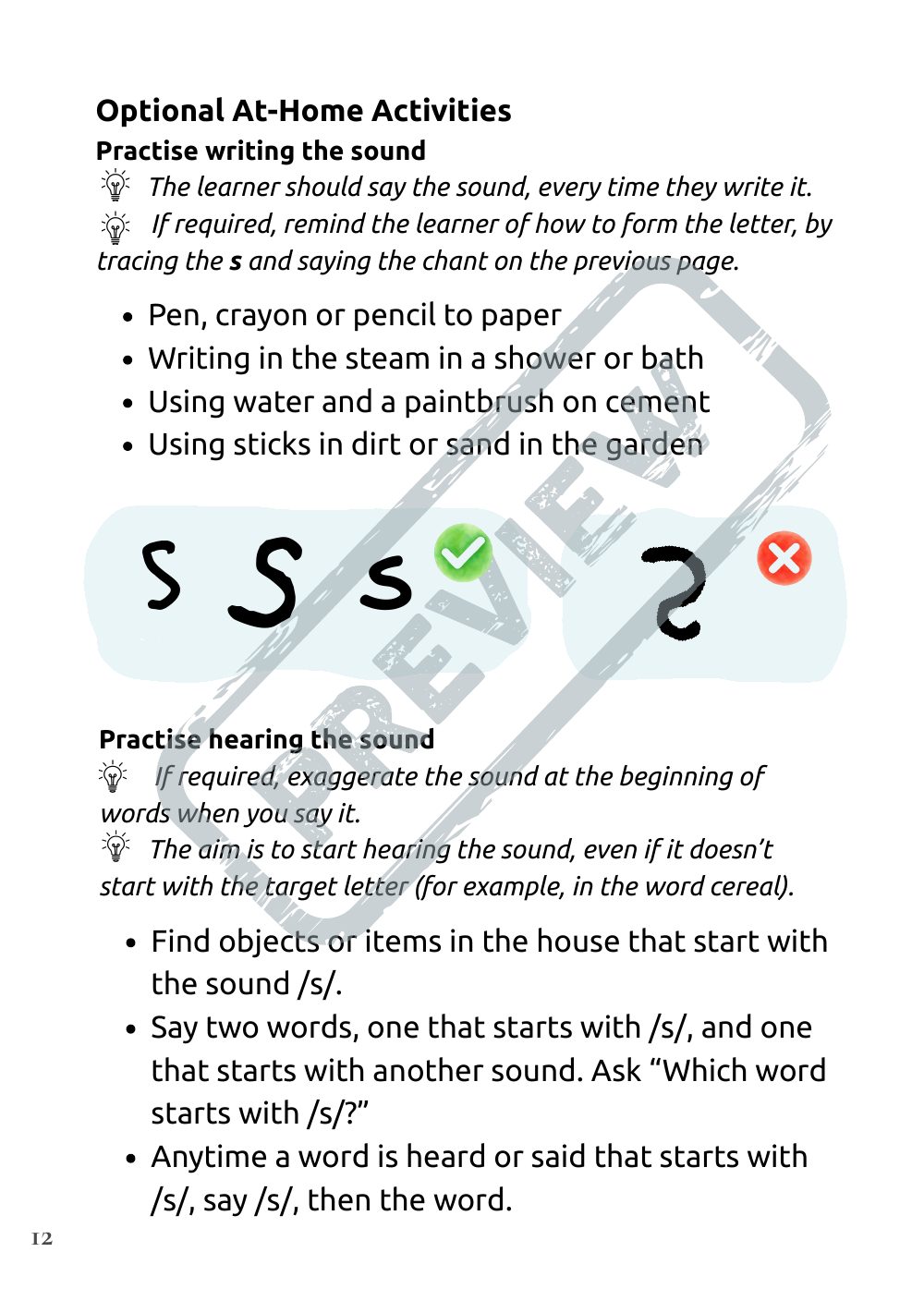
Each tale also comes as a smaller Read to Me book that children take home to share with their families. Parents get simple prompts to talk, point, and retell, a QR code to hear and see how the focus sound is said, and a few playful activities for the days that follow. School and home end up telling the same story, using the same prompt for the same sound.

Take a look inside Sally the Seal
The thinking behind the design
Each part of a Reading Success Tale draws on well-established findings in early literacy and oral language research.
Picture mnemonics built into the letter
Images that form part of the letter shape can help young children link a sound to its letter, particularly when the image is faded so children move to the plain letter.
de Graaff et al., 2007; Kalender, 2026
Movement that follows the letter's shape
Tracing and air-drawing along the real formation path supports memory for letters more than unrelated actions.
Labat et al., 2015; King, 2019
Talk-rich story reading
Read-alouds with explicit vocabulary teaching, open questions and retelling support children's oral language.
Wasik & Bond, 2001; Dowdall et al., 2019; Dickinson et al., 2019
The tales bring these elements together around one story at a time.
Choose the bundle that suits your setting
All prices are plus postage and GST.
Starter Pack
- 7 A3 big books
- 3 copies of each Read to Me Tale (78 books)
- 1 set of A6 mnemonic cards
Small Class Pack
- 7 A3 big books
- 7 copies of each Read to Me Tale (182 books)
- 1 set of A6 mnemonic cards
Complete Class Pack
- 7 A3 big books
- 12 copies of each Read to Me Tale (312 books)
- 1 set of A6 mnemonic cards
- 1 set of A4 mnemonic cards
Ordering for several classrooms or a whole school? Get in touch, and we'll put together a quote.
Questions
Do the tales replace a phonics program?
No. They sit alongside it. In Foundation, each story is read before the matching grapheme is taught explicitly, and the mnemonic is faded once children can recall the letter.
Which year levels are they for?
The stories are written for preschool and Foundation. The letter formation prompts are also useful for correcting formation errors up to Year 2.
How long does a story take?
A first read takes a few minutes. Each story is designed to be revisited over several days, with a different focus each time.
Do teachers need training to use them?
No. The How to Use guide at the front of each big book explains the approach, and prompts are printed on the pages where you need them.
References
- de Graaff, S., Verhoeven, L., Bosman, A., & Hasselman, F. (2007). Integrated pictorial mnemonics and stimulus fading: Teaching kindergartners letter sounds. British Journal of Educational Psychology, 77(3), 519–539. doi.org/10.1348/000709906X160011
- Dickinson, D. K., et al. (2019). Teaching for breadth and depth of vocabulary knowledge: Learning from explicit and implicit instruction and the storybook texts. Early Childhood Research Quarterly. doi.org/10.1016/j.ecresq.2018.07.012
- Dowdall, N., et al. (2019). Shared picture book reading interventions for child language development: A systematic review and meta-analysis. Child Development. doi.org/10.1111/cdev.13225
- Kalender, B. (2026). Enhancing letter recognition in first graders with embedded picture mnemonics: Insights from cognitive load and dual coding theories. Frontiers in Psychology, 17. doi.org/10.3389/fpsyg.2026.1726843
- King, R. (2019). Exploring the relative effectiveness of functionally embodied and non-functionally embodied early literacy interventions [Thesis]. doi.org/10.14288/1.0383300
- Labat, H., Vallet, G., Magnan, A., & Écalle, J. (2015). Facilitating effect of multisensory letter encoding on reading and spelling in 5-year-old children. Applied Cognitive Psychology, 29, 381–391. doi.org/10.1002/acp.3116
- Wasik, B. A., & Bond, M. A. (2001). Beyond the pages of a book: Interactive book reading and language development in preschool classrooms. Journal of Educational Psychology, 93(2), 243–250. doi.org/10.1037/0022-0663.93.2.243